Bill Summary

The United States-Israel FUTURES Act (H.R. 7540/S. 3855)

February 25, 2026

As the threats facing the United States and Israel continue to grow in scale and technological sophistication, both countries must innovate faster and more effectively to maintain their military edge on future battlefields.
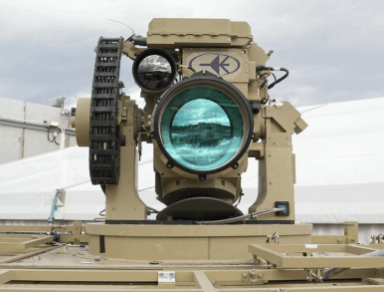
iron beam
Israel’s Iron Beam laser defense system has the potential to revolutionize the future of warfare.

The United States–Israel Framework for Upgraded Technologies, Unified Research, and Enhanced Security (FUTURES) Act of 2026 (H.R. 7540/S. 3855) expands existing bilateral defense cooperation to support long-term research and development with Israel and deployment of jointly developed defense technologies — strengthening the U.S. defense industrial base and ensuring new capabilities quickly reach American and Israeli servicemembers.

The legislation is authored in the Senate by Sens. Ted Budd (R-NC) and Kirsten Gillibrand (D-NY) and in the House by Reps. Ronny Jackson (R-TX) and Don Davis (D-NC).

Key Provisions:

  • Establishes the United States-Israel Defense Technology Cooperation Initiative (DTCI) within the Department of Defense to support long-term joint research and development activities with Israel. The initiative will identify promising new jointly developed defense technologies and facilitate their rapid integration into the U.S. and Israeli militaries.
  • Authorizes $150 million annually through Fiscal Year 2029 for the new program.
  • Expands long-term U.S.-Israel cooperation in critical warfighting domains including counter-unmanned systems (air, land, and maritime), missile and air defense, subterranean warfare, artificial intelligence, autonomous systems, directed energy, cyber defense, electronic warfare, biotechnology, and contested logistics.
  • Promotes the rapid transition of technologies from research and prototyping into U.S. acquisition programs and fielded military capabilities, ensuring U.S. servicemembers benefit from allied innovation.
  • Strengthens the U.S. defense industrial base by encouraging U.S.-based co-production, joint ventures, and manufacturing partnerships with Israeli industry.
  • Enhances coordination across the Department of Defense, military services and innovation organizations — to align efforts and avoid duplication in bilateral technology development.
  • Requires regular briefings, annual reports to Congress, and public unclassified updates on progress, technology transitions, and industrial partnerships, while protecting sensitive national security information.